Our Facilities
We are proud to call the former Coburg Moreland Bowls Club at 19 Harding Street, Coburg our home. The Merri Community Shed is steadily growing into a vibrant, inclusive place where people of all backgrounds, skills, and interests can learn, create, repair, and connect.
Our facilities continue to expand as new programs launch and more members join our community.
General sessions offer supervised access to woodworking, metalwork, electronics, sewing, and creative workspaces.
We have recently surveyed our members regarding the addition of an extra weekly session. We are currently evaluating the most suitable times and expect to announce the new session in early 2026. If you would like to provide feedback, please email us at contact@merrics.org.au.
In addition to our core hours, the Shed may open at other times for inductions, volunteer days, program development, and special projects. These additional sessions depend on facilitator availability and are announced via email and our social channels.
Amenities
On some Sundays, you’ll also find our popular BBQ bacon and egg rolls available for a $5 contribution or perhaps a sausage in bread is more your style ($3.50).
Tea and coffee facilities are available at all sessions, and soft drinks are available for a $2 donation.
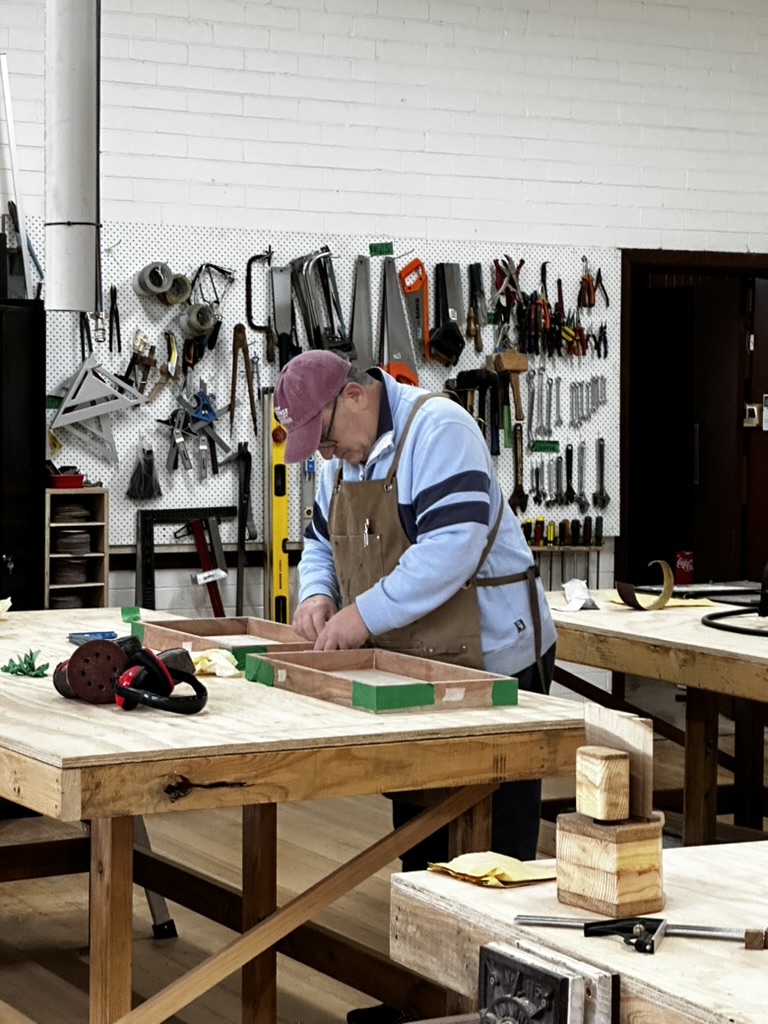
Woodworking
Our woodworking workshop is the most established part of the Shed and includes:
Table saw, band saws, mitre saws
Thicknesser and jointer
Drill presses and routers
Sanders, power tools, and hand-tool stations
Clamps, benches, layout tools and workholding
This space is suitable for beginners and experienced woodworkers alike, with supervision during all open sessions.
Woodturning
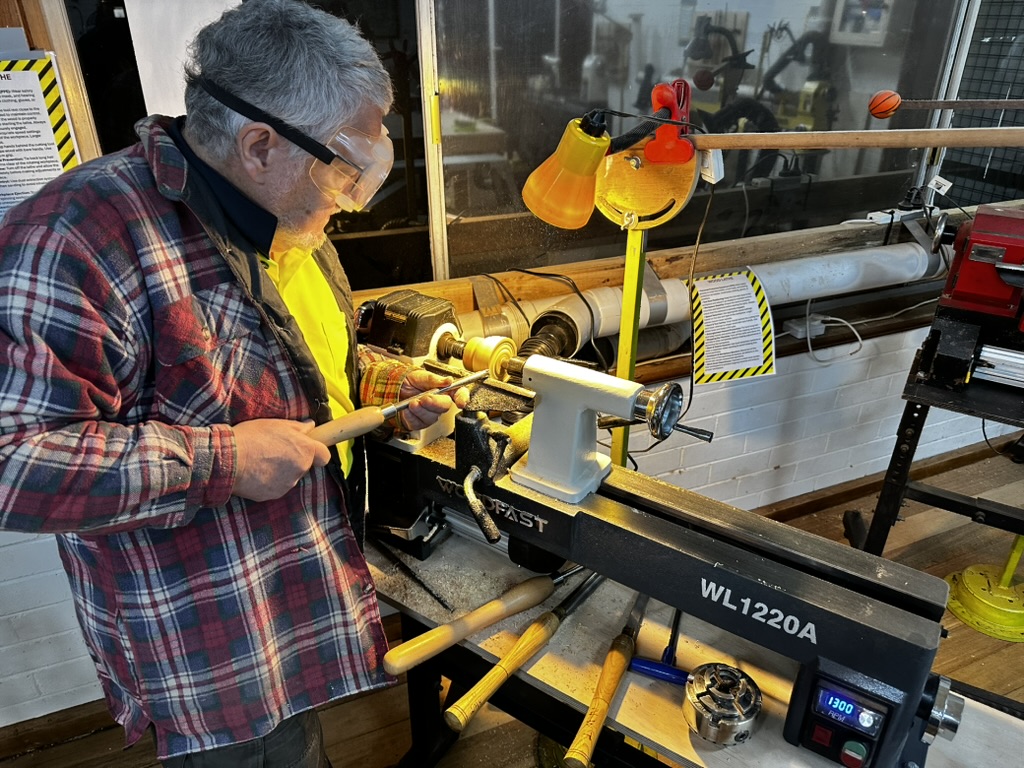
Our Woodturning facilities have grown significantly following the merger with the Northern Woodturners, who relocated to the Shed in 2024 and formally merged into Merri Community Shed in 2025.
Woodturning is supported by dedicated lathes and experienced makers, bringing a strong depth of skill, mentoring, and shared learning to our community.
Wednesday mornings are a woodturning-focused session, ideal for collaborative learning, project work, and skill development. In addition, woodturning lathes and tools are available during all general Shed sessions, subject to induction and safe operating requirements.
Activities supported include:
Spindle and bowl turning
Tool sharpening and lathe setup
Functional and decorative turning projects
Skill sharing across beginner and advanced levels
Members regularly create a wide range of items on the lathe, from practical pieces such as tool handles & knobs, spice grinders, pens, and kitchenware, through to games (i.e. skittles), decorative items, and creative resin-and-wood projects.
This area welcomes makers of all backgrounds and experience, with a strong emphasis on safe practice, mentoring, and community learning.
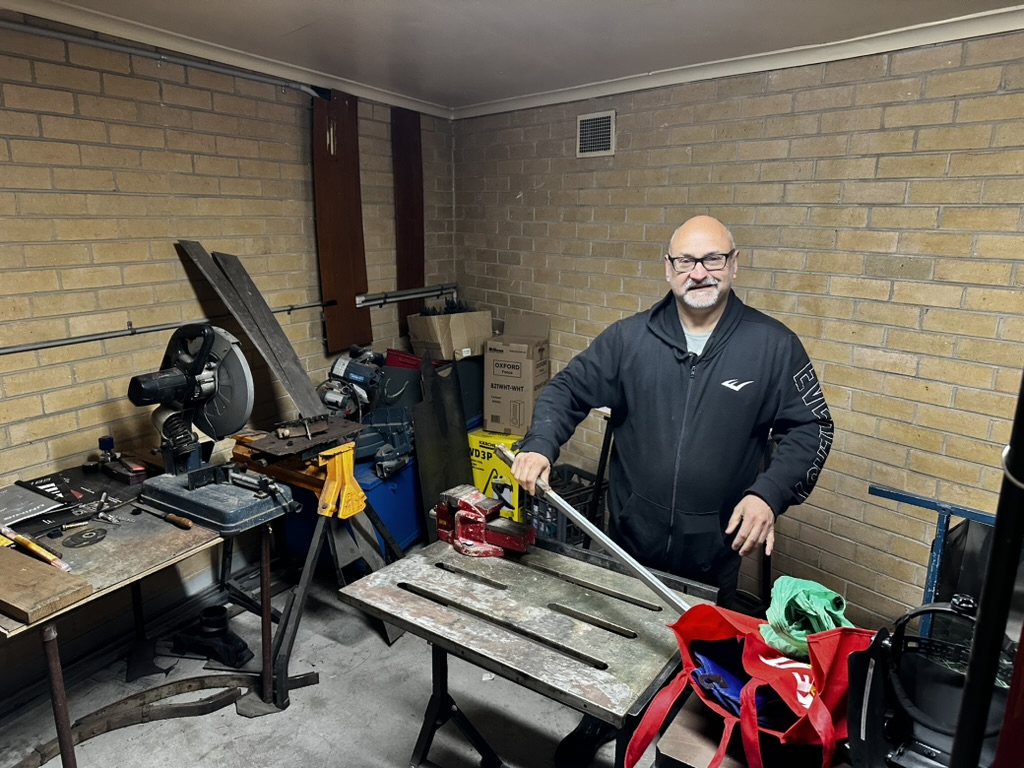
Metalwork
(Available during all general Shed sessions)
Members can access metalworking tools and equipment during any general Shed session for activities such as:
Cutting, grinding, drilling, and shaping
Welding and fabrication (subject to induction and supervision)
Repairs, restoration, and creative metalwork
Toolmaking and other practical metal projects
Metalwork activities are supported by experienced members and facilitators, with a strong emphasis on safe work practices and working within individual skill levels.
Forging & Blacksmithing
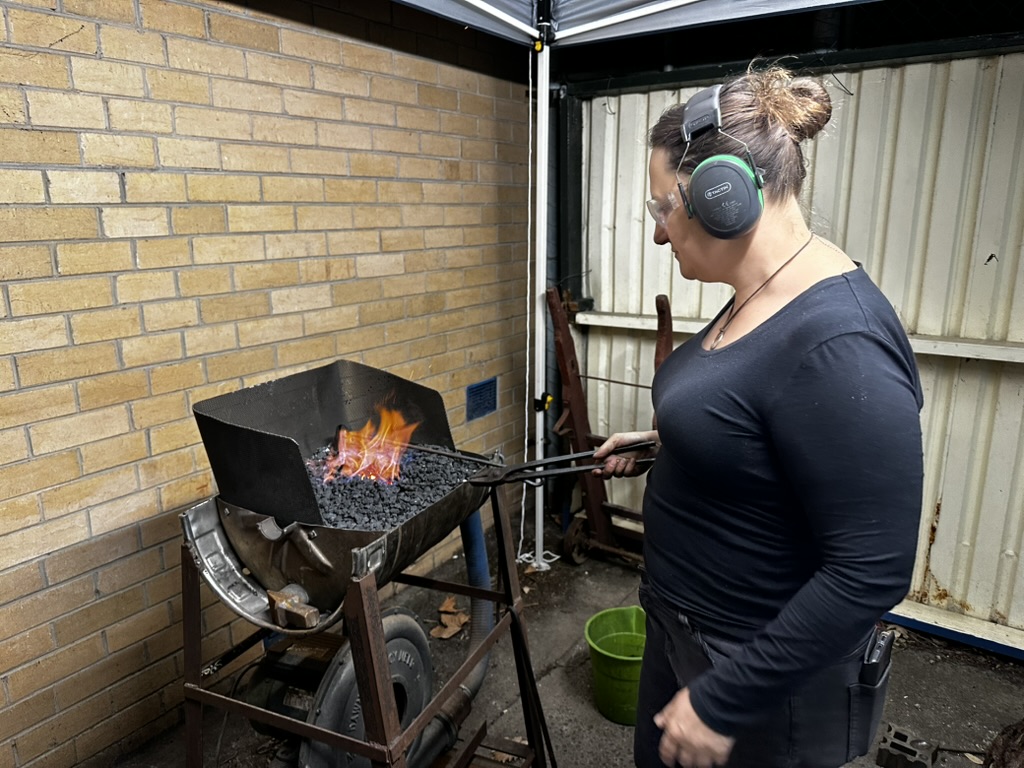
Our Forging & Blacksmithing program offers members the opportunity to learn and practise traditional hot-metal forging techniques in a structured, safe, and supportive environment.
Our Introduction to Blacksmithing classes run on Tuesday evenings and provide hands-on learning in:
Core forging techniques
Heat management and forge safety
Drawing out, bending, tapering, and twisting steel
Creating functional or decorative forged items
Due to limited forge capacity, bookings are essential. As places become available, an email invitation is sent to all members with upcoming dates and a link to confirm attendance.
About Smithing & Forging
Blacksmithing is part of a wider family of traditional smithing and forging disciplines, which focus on shaping metal by hand using heat, tools, and skill. These include:
Blacksmithing – Working primarily with iron and steel
Bladesmithing – Crafting knives and edged tools
Coppersmithing – Forming copper for vessels, artwork, and fittings
Whitesmithing – Shaping and finishing metal without heat
Ornamental forging – Decorative and artistic metalwork
Our current program focuses on introductory forging and blacksmithing, with scope to explore other smithing disciplines as member interest, facilitation, and safe operating capacity develop.
Electronics & Small Repairs
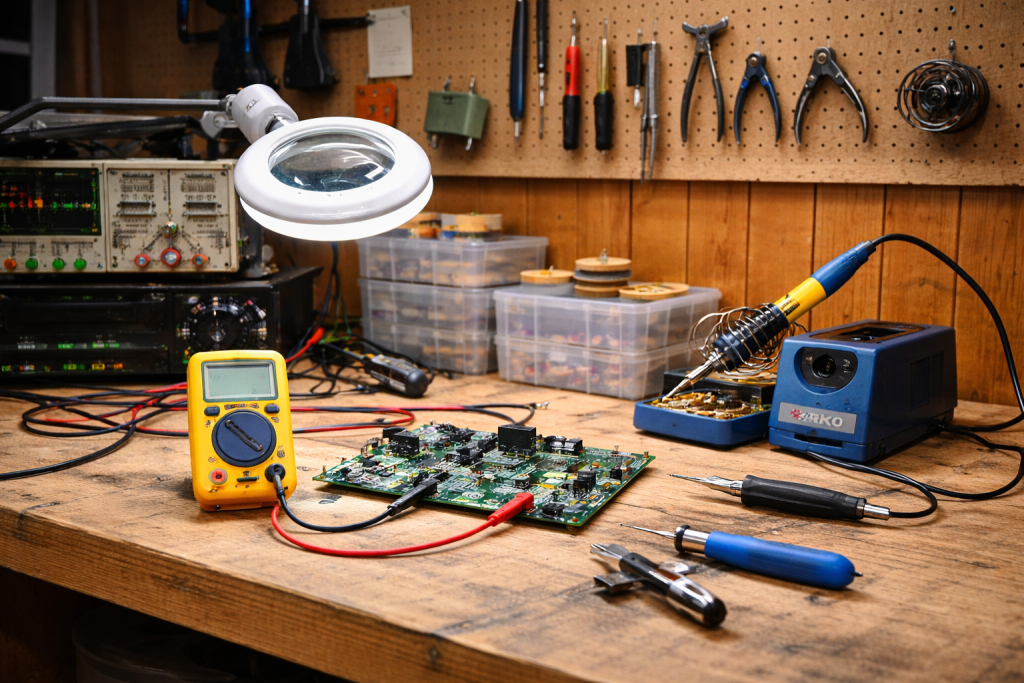
The Shed supports basic electronics work and small-scale repairs, providing members with access to tools, equipment, and shared knowledge during general Shed sessions.
Electronics activities may include:
Soldering and desoldering
Circuit testing and fault-finding
Small electronic repairs and modifications
Test and tag activities (where appropriately trained)
Available equipment includes soldering stations, electronic test tools such as oscilloscopes and multimeters, and general electronics hand tools.
Electronics and small repair activities are supported by experienced members and are undertaken in line with safe operating practices. This area also aligns closely with the Shed’s planned return of the Repair Café program.
Textiles & Sewing
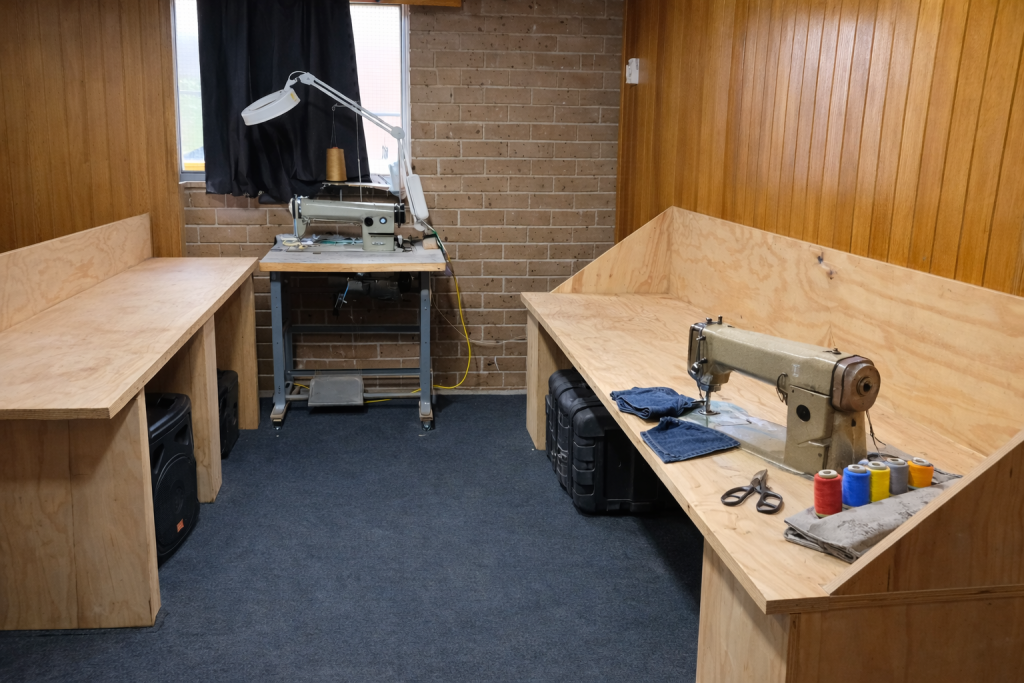
The Shed supports small-scale textiles and sewing projects, with facilities available for members to work on practical and creative sewing tasks during general Shed sessions.
The Shed has an industrial sewing machine, suitable for working with heavier fabrics and materials. Members have used this equipment for tasks such as:
Clothing repairs and alterations
Making or repairing bags, covers, and canvas items
Upholstery and heavy-fabric projects
Simple textile-based making and repairs
Textiles and sewing activities are available for members with appropriate experience or induction, and are supported through shared learning and safe operating practices.
Emerging Programs
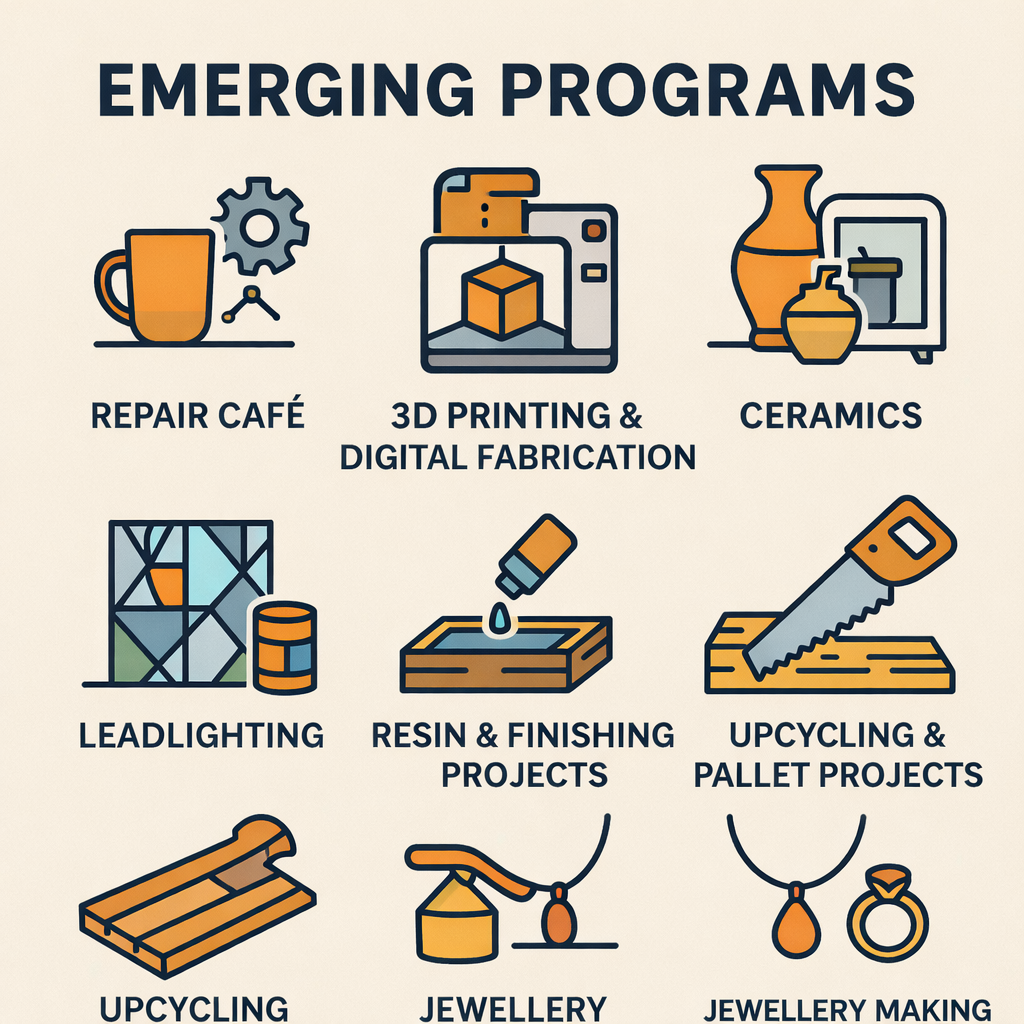
In addition to our core woodworking, woodturning, metalwork, and blacksmithing activities, the Shed is developing a range of emerging programs. These programs build on existing equipment, facilities, and member interest, and will be introduced or expanded as volunteer support, facilitators, and appropriate safety frameworks are established.
Many of these programs already have equipment, space, or early activity in place. In some cases, the missing piece is simply members putting their hand up, sharing ideas, or helping shape the next steps.
If you have skills, interest, ideas, or would like to help launch or grow any of these programs, we’d love to hear from you. Please get in touch email us here — often all that’s needed is the right people and a bit of coordination.
Repair Café (Planned Return)
Our Repair Café program is currently on hold but is planned to return. It focuses on repairing household items, extending product life, and reducing waste.
We have allocated space for the Repair Café, however we currently lack the volunteer leadership needed to relaunch the program. A future enhancement includes the addition of 3D printing to help reproduce or rebuild hard-to-find components.
Ceramics
There is strong interest in ceramics within the community, and the Shed has identified the potential to introduce clay-based making and firing.
We have allocated space for this program, which is currently in the planning phase and will require funding, equipment, and trained facilitators before launch.
Leadlighting
The Shed has some materials and capability to support leadlighting and stained-glass work.
This program will be introduced once more members are involved and appropriate safety procedures, workspace setup, and facilitation are in place.
Resin & Finishing Projects
There has been growing interest in resin-based projects and finishing techniques.
We already have resin equipment and have completed several projects. Further development will depend on establishing a suitable clean and controlled workspace.
Upcycling & Pallet Projects
Simple upcycling and pallet-based projects are being explored as accessible, entry-level activities that support reuse, creativity, and practical skill development.
We have equipment to break down pallets, de-nail boards, and have already completed several projects in this area.
Jewellery Making
Jewellery and small-scale craft making has been identified as a potential future program.
We have contacts with experienced leaders willing to teach classes, and a small number of members already doing this work. The next step is formalising this into a structured program.